If you are a freelance logo designer or a logo design agency, it is your responsibility to explain and communicate your concepts very clearly. It’s not always a case that your client knows everything about the logo or branding. You need to explain everything in detail. It’s your right and responsibility that you describe the concepts, the objective behind your logo. I have seen logo designers accepting whatever clients are mentioning or asking. Clients keep asking and designers keep designing the variations and it becomes a never ending project.
If you are a logo designing agency or a professional logo designer you would agree on the dialogues below. I am sharing my recent discussion with a client who was little unsure if the designs we shared were good for him.
Designer:
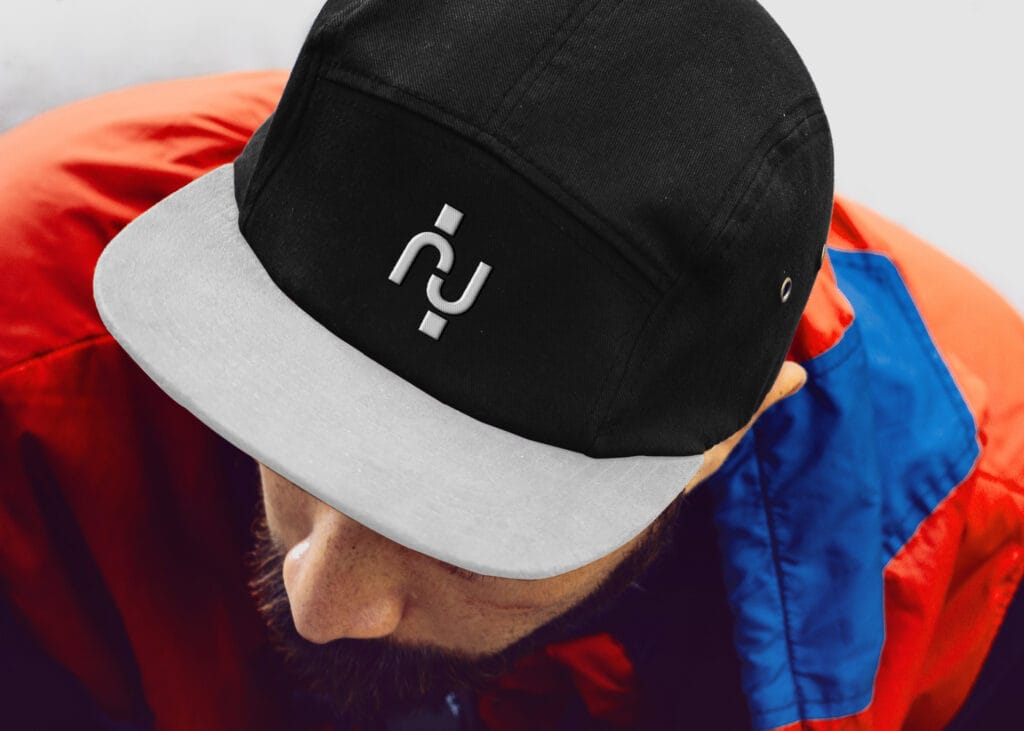
So, these are the geometric squares we’ve used. We added them to give the logo a more distinctive feel. Whenever you use geometric shapes, it improves visibility and also brings harmony and balance to the overall design.
Also, personally, I feel that a square represents stability and structure. So that thought was also part of the concept.
Initially, we started with just the PJ, but when we added these squares, it looked better and gave the logo more distinction at first glance.
Client:
Okay. About the first design-the floral one-what I felt immediately is that it looks a bit generic. I understand that I shared the floral inspiration with you, and I’m okay with that direction.
But the moment I saw it, it felt like a very common floral design. Even the star version felt quite generic and directly like a floral pattern.
Designer:
Got it.
Client:
Yes, that’s why I felt that way. When I gave that theme, I was imagining something different. But when it’s made in a boxy floral format, it starts looking like what we see commonly. That didn’t work for me.
Then, when I saw the second option, it felt much more professional—the PJ one.
Client (continues):
But here’s my concern. Using initials like PJ is a very common approach. For example, any brand like “Pepe Jeans” or similar would use their initials. So many companies can create something like this in the future as well.
So what makes this unique?
Designer:
Fair question. This is essentially a monogram logo style. Even big brands use it. For example, Jaguar recently introduced a simplified icon using just the letter “J” in a stylised way.
The idea is-if we can create a strong connection with the brand name and still make it look unique and simple, that’s a big advantage.
Honestly, we didn’t initially plan to use PJ because you had earlier said no. But while exploring, we noticed that the shape of “P” and “J” are quite similar. So we tried flipping one, and it worked really well.
Sometimes these things happen naturally during the design process.
Client:
Yes, and honestly, this is the main reason I liked this logo.
I imagined it like the Under Armour logo-how it sits on caps and products. If I place this PJ logo on a cap, it gives a very premium feel. That’s exactly the kind of branding I want.
Designer:
That’s great to hear.
Client:
But one concern-what if another brand in the future uses a similar PJ concept?
Designer:
Good point. First, once you trademark this logo, you’ll have legal rights over it.
Second, the exact typeface, proportions, and execution we’ve used are very specific. The chances of someone landing on the exact same design are very low.
Client:
Okay. Another thing I noticed-the PJ sometimes looks like an “N”.
Designer:
Yes, exactly. That’s actually one of the reasons we added those squares.
Without them, the shape could be misread as “N”. The squares help break that perception and add clarity, along with making the design more distinctive.
Client:
Got it. That makes sense.
But I’ll need a clear explanation for those squares, because people like my family or friends will definitely ask about it.
Designer:
Of course. You can explain it in two ways:
- Conceptual meaning – Squares represent stability, trust, and structure.
- Design purpose – They help make the logo more distinctive and avoid misreading the letters.
Client:
Also, when I first saw it, I felt like it looked like two hands or maybe a handshake.
Designer:
That’s an interesting observation. It wasn’t intentional, but sometimes these hidden interpretations actually add depth to a logo.
Like the FedEx logo-people later discovered the arrow in negative space, and it became a talking point.
Client:
Yes, exactly. I’ve attended workshops where they say logos should have some hidden meaning or mystery.
Designer:
True, but not every logo starts with that intention. Sometimes those meanings emerge naturally, which is even better.
Client:
Makes sense.
Now, one more point-the text “Project June” feels slightly light. Since all my products will be stitched, not printed, I’ll need slightly bolder text for better thread visibility.
Designer:
That’s valid. Digital and stitching behave differently.
We can give you 2–3 weight options, but ideally, you should test one sample in stitching to finalize the exact thickness.
Client:
Yes, slightly bolder would work better for me.
Designer:
Sure, we’ll explore that.
Client:
So, to summarise-let’s focus only on the second design (PJ). I really like that direction.
You can either refine this further or show variations of it. Even a new direction is fine, but this PJ concept is very close to what I want.
Designer:
Understood. We’ll explore both refinement and a few variations in this direction.
Client:
Also, I’m completely moving away from the floral theme for now.
Maybe in the future, for linen or other product lines, we can bring floral elements back. But for now, I want strong brand recognition first.
Designer:
That’s a very good approach. First build the brand identity, then expand visually.
Client:
Exactly.
And one more thing-I was imagining the logo on a cap. The floral design would look good only in large size, but the PJ works even in small sizes and feels more like a proper brand mark.
Designer:
Yes, that’s the strength of a simple monogram—it scales very well.
Client:
Perfect. I think we’re aligned now. Let’s move forward with this.
Designer:
Great. We’ll work on it and share updated options in the next round.
Client:
Sounds good. Thanks!
Conclusion:
Since the client liked one of the three designs we shared, he was little unsure if that was the right design for him or not. The designer communicated clearly the concept of the logo and why that logo should be the right choice for him. After a few arguments, the client agreed to take the logo. Sometimes when client says the he is not aligned with the logo doesn’t mean that logo is not good. As a logo designer it’s your responsibility to communicate your concept correctly and make him understand why your logo is the best fit for him.
Logo designing is not just about sketching or designing only, it’s more about communicating the concept clearly and effectively.